Popular
Searches:
Popular
Searches:
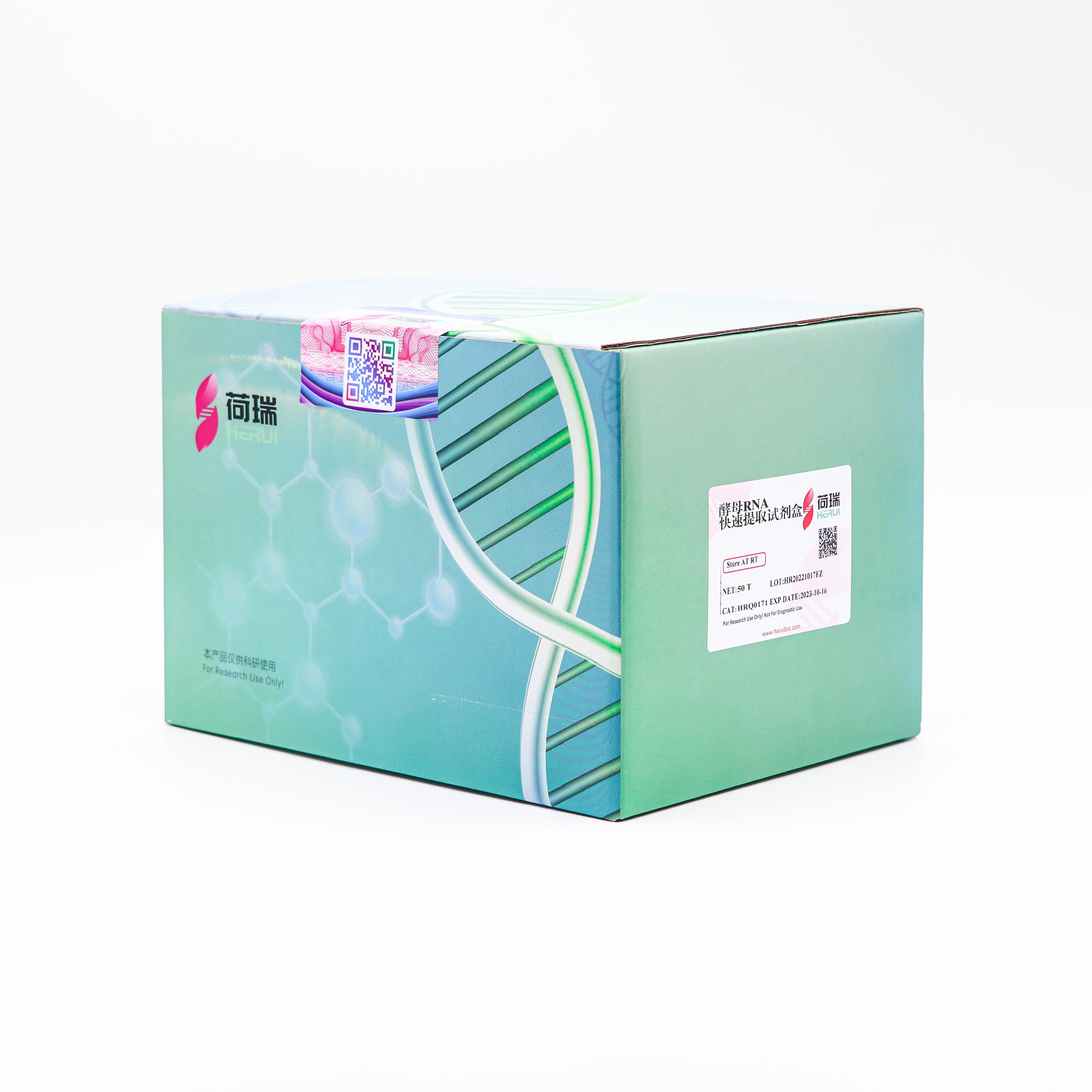
Yeast RNA rapid extraction kit
Price:
¥980
Cargo Number:
HRQ0171
Specification:
50T
Specification and quality control:
Product Details
Product Specification
Product Information
Product Name | Product Number | Specification |
Yeast RNA Rapid Extraction Kit | HRQ0171 | 50T |
Product Description
This kit uses a special centrifugal adsorption column and buffer system to extract total RNA from yeast. Yeast cells are treated with lytic enzymes to remove the cell wall, and the unique lysis solution/β-mercaptoethanol quickly lyses the cells and inactivates the cellular RNase. After adjusting the binding conditions with ethanol, RNA is selectively adsorbed to the silicon matrix membrane in the centrifugal column. Then, through rapid rinsing-centrifugation and other steps, the deproteinization solution and rinsing solution remove impurities such as cell metabolites and proteins, and finally low-salt RNase free H20 elutes the pure RNA from the silicon matrix membrane.
Product composition
Components | storage | 50T |
Buffer Y1 | Room temperature | 30mL |
Lytic enzyme (10U/μL) | -20℃ | 2500U |
Buffer RLT | Room temperature | 45mL |
Buffer RW1 | Room temperature | 45mL Please add 11mL of anhydrous ethanol before first use |
Buffer RPE | Room temperature | 11mL Please add 44mL of anhydrous ethanol before first use |
RNase-free H 2 O | Room temperature | 10mL |
gDNA cleanup columns and collection tubes | Room temperature | 50 sets |
RNA adsorption columns and collection tubes | Room temperature | 50 sets |
Features
1. Do not use toxic reagents such as phenol and chloroform.
2. Simple, single sample operation can generally be completed within 30 minutes.
3. Multiple column washings ensure high purity, with a typical ratio of OD 260 / OD 280 of 2.1 to 2.2, and almost no DNA residue.
Can be used for RT-PCR, Northern-blot and various experiments.
Transportation and storage methods
1. The kit can be stored at room temperature for 12 months without affecting its effectiveness.
2. Storing the test kit at low temperature (4℃ or -20℃) will cause solution precipitation and affect the use effect. Therefore, transportation and storage should be carried out at room temperature (15℃-25℃).
3. Avoid long-term exposure of reagents to air to prevent volatilization, oxidation, and pH changes. Close the lid of each solution immediately after use.
Precautions
1. The centrifuge used in the experiment can be operated at room temperature (4°C is also acceptable) and the speed can reach 12,000rpm.
2. You need to prepare ethanol and β-mercaptoethanol by yourself.
3. The sample processing volume cannot exceed the processing capacity of the centrifugal column, otherwise it will easily lead to DNA residue or reduced RNA yield.
4. RLT and RW1 contain irritating compounds. Be sure to wear gloves when operating to avoid contamination of skin, eyes and clothes. If contaminated with skin or eyes, rinse with plenty of water or saline.
5. About trace amounts of DNA residues:
Generally speaking, any total RNA extraction reagent cannot completely avoid trace amounts of DNA residue during the extraction process (DNase digestion cannot achieve 100% residue-free). Our RNA extraction products, due to the use of our company's special lysis solution system and centrifuge tube adsorption column technology, have removed most of the DNA and do not require DNase digestion, and can be directly used for RT-PCR and qPCR. In some special cases, such as excessive DNA content causing residues or strict mRNA expression analysis by fluorescence quantitative PCR, we recommend the following when selecting templates and primers:
(1) Select intron-spanning primers that cross the junction region in the mRNA so that the DNA cannot serve as a template in the amplification reaction.
(2) Select primer pairs that produce products of different sizes on genomic DNA and cDNA.
(3) Before rinsing with deproteinizing buffer RW1 in step 1, perform DNase I on-column digestion directly on the centrifuge column. You can ask for specific operating instructions before purchasing the DNase I on-column digestion kit (Cat. No.: HRN0291).
6. This product is for scientific research purposes only!
How to use
hint:
→Before the first use, please add the specified amount of anhydrous ethanol to Buffer RW1 and Buffer RPE and mark them!
→ Add 10 μL of β-mercaptoethanol or 20 μL of 2M DTT to 1 mL of Buffer RLT before use. Lysis buffer containing β-mercaptoethanol or DTT can be stored at room temperature for up to 1 month.
→Pipette the usage amount of buffer Y1 (100 μL for a small amount of yeast and 600 μL for a medium amount of yeast) and add 0.1% β-mercaptoethanol to the buffer.
1. Small-scale yeast cell culture
1. Collect 1 mL (about 10 7 cells) of yeast culture in logarithmic growth phase into a 1.5 mL centrifuge tube, centrifuge at 12,000 rpm for 30 seconds, and discard the supernatant as much as possible.
2. Add 100 μL Buffer Y1 (make sure 0.1% β-mercaptoethanol has been added), gently pipette to fully resuspend the cells; add about 50 U of lytic enzyme according to the amount of yeast, invert thoroughly to mix, and incubate at 37°C for 15-30 minutes to digest the cell wall. Invert several times in the middle to promote digestion.
Note: If the cell wall breaking effect is not good, resulting in low RNA yield, you can increase the amount of lytic enzyme to increase the working concentration of the enzyme, and you can also extend the digestion time to improve the effect. Yeast that is not suitable for digestion with lytic enzymes can be broken by glass beads vortexing or repeated freezing and thawing.
3. Add 350 μL Buffer RLT, mix by pipetting, and shake vigorously by hand for 20 seconds to fully lyse.
4. Assemble the gDNA cleanup column and collection tube, add the solution in step 3 to the gDNA cleanup column, and centrifuge at 12,000 rpm for 2 minutes. Carefully transfer the supernatant in the collection tube to a new centrifuge tube (do not touch the precipitate in the collection tube).
5. Add 250 μL of anhydrous ethanol and mix immediately by pipetting.
6. Add the above mixture to a new RNA adsorption column (the adsorption column is placed in the collection tube), centrifuge at 12,000 rpm for 60 seconds, discard the waste liquid, and reuse the collection tube.
7. Add 700 μL of Buffer RW1 to the centrifuge column, cover the lid, centrifuge at 12,000 rpm for 15 seconds, discard the waste liquid, and reuse the collection tube.
8. Add 500 μL Buffer RPE to the centrifuge column, cover the lid, centrifuge at 12,000 rpm for 15 seconds, discard the waste liquid, and reuse the collection tube.
9. Repeat the process, add 500 μL Buffer RPE to the centrifuge column, cover the lid, and centrifuge at 12,000 rpm for 2 minutes (centrifuge for a longer time to ensure that there is no ethanol residue during RNA elution)
*10. This step is optional. Load the spin column into a new 1.5 mL centrifuge tube, cover it with a lid, and centrifuge at 12,000 rpm for 1 min to completely remove the residual Buffer RPE.
11. Place the RNA adsorption column in a new 1.5 mL centrifuge tube, add 30-50 μL of enzyme-free water to the center of the membrane of the adsorption column, cover the lid, centrifuge at 12,000 rpm for 1 min, and elute and collect the RNA.
Note: If the expected RNA yield is >30μg, add another 30-50μL of enzyme-free water to the centrifuge column, repeat step 12, and combine the two eluates; if a high concentration of RNA is required, it is recommended to add the first eluate back to the centrifuge column and repeat step 12.
The RNA concentration of the elution solution for eluting RNA twice is high. The RNA yield of the elution solution combined after two elutions is 15-30% higher than the former, but the concentration is lower. Users can choose according to their needs.
2. Medium-scale yeast cell culture
1. Collect 2-3 mL (about 3 × 10⁷ cells ) of yeast culture in logarithmic growth phase into a 1.5 mL centrifuge tube (can be divided into two centrifuge tubes), centrifuge at 12,000 rpm for 30 seconds, and discard the supernatant as much as possible.
2. Take 600 μL Buffer Y1 (make sure 0.1% β-mercaptoethanol has been added), gently pipette and fully resuspend the yeast obtained in step 1, add about 100-150 U of lytic enzyme according to the amount of yeast, invert and mix thoroughly, incubate at 37°C for 15-30 minutes to digest the cell wall, and invert several times in the middle to help digestion.
Note: If the cell wall breaking effect is not good, resulting in low RNA yield, you can increase the amount of lytic enzyme to increase the working concentration of the enzyme, and you can also extend the digestion time to improve the effect. Yeast that is not suitable for digestion with lytic enzymes can be broken by glass beads vortexing or repeated freezing and thawing.
3. Centrifuge at 12,000 rpm for 1 minute and discard the supernatant as much as possible.
4. Add 350 μL Buffer RLT, mix by pipetting, and shake vigorously by hand for 20 seconds to fully lyse.
5. Assemble the gDNA cleanup column and collection tube, add the solution in step 4 to the gDNA cleanup column, and centrifuge at 12,000 rpm for 2 minutes. Carefully transfer the supernatant in the collection tube to a new centrifuge tube (do not touch the precipitate in the collection tube).
5. Add 350 μL of 70% ethanol (prepared with DEPC water) and mix immediately by pipetting.
6. Add the above mixture to a new RNA adsorption column (the adsorption column is placed in the collection tube), centrifuge at 12,000 rpm for 60 seconds, discard the waste liquid, and reuse the collection tube.
7. Add 700 μL of Buffer RW1 to the centrifuge column, cover the lid, centrifuge at 12,000 rpm for 15 seconds, discard the waste liquid, and reuse the collection tube.
8. Add 500 μL Buffer RPE to the centrifuge column, cover the lid, centrifuge at 12,000 rpm for 15 seconds, discard the waste liquid, and reuse the collection tube.
9. Repeat the process, add 500 μL Buffer RPE to the centrifuge column, cover the lid, and centrifuge at 12,000 rpm for 2 minutes (centrifuge for a longer time to ensure that there is no ethanol residue during RNA elution)
*10. This step is optional. Load the spin column into a new 1.5 mL centrifuge tube, cover it with a lid, and centrifuge at 12,000 rpm for 1 min to completely remove the residual Buffer RPE.
11. Place the RNA adsorption column in a new 1.5 mL centrifuge tube, add 30-50 μL of enzyme-free water to the center of the membrane of the adsorption column, cover the lid, centrifuge at 12,000 rpm for 1 min, and elute and collect the RNA.
Note: If the expected RNA yield is >30μg, add another 30-50μL of enzyme-free water to the centrifuge column, repeat step 12, and combine the two eluates; if a high concentration of RNA is required, it is recommended to add the first eluate back to the centrifuge column and repeat step 12.
The RNA concentration of the elution solution for eluting RNA twice is high. The RNA yield of the elution solution combined after two elutions is 15-30% higher than the former, but the concentration is lower. Users can choose according to their needs.